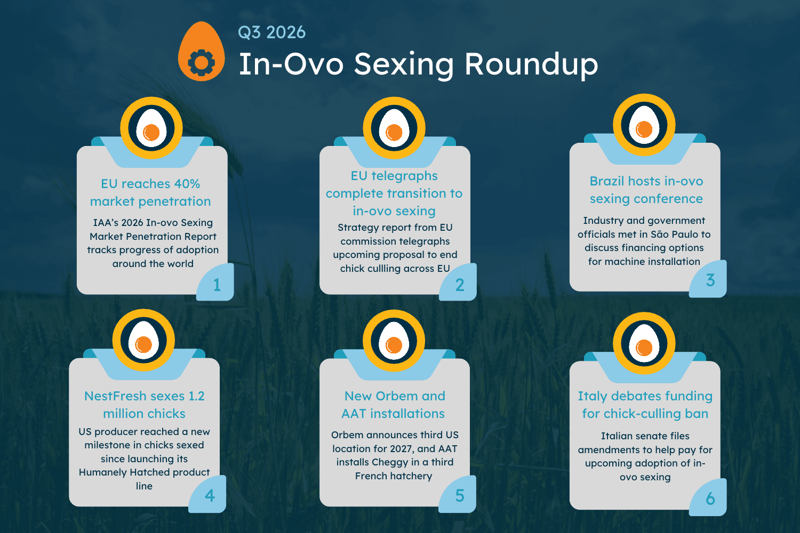
In-Ovo Sexing Quarterly Roundup: Q3 2026
Welcome to Innovate Animal Ag's Q3 2026 in-ovo sexing roundup, where we dive into the latest news for the technology and what it means for consumers and producers.

Topic
Commercial adoption, emerging systems, market research, and policy around alternatives to male chick culling.
50 storiesWelcome to Innovate Animal Ag's Q3 2026 in-ovo sexing roundup, where we dive into the latest news for the technology and what it means for consumers and producers.
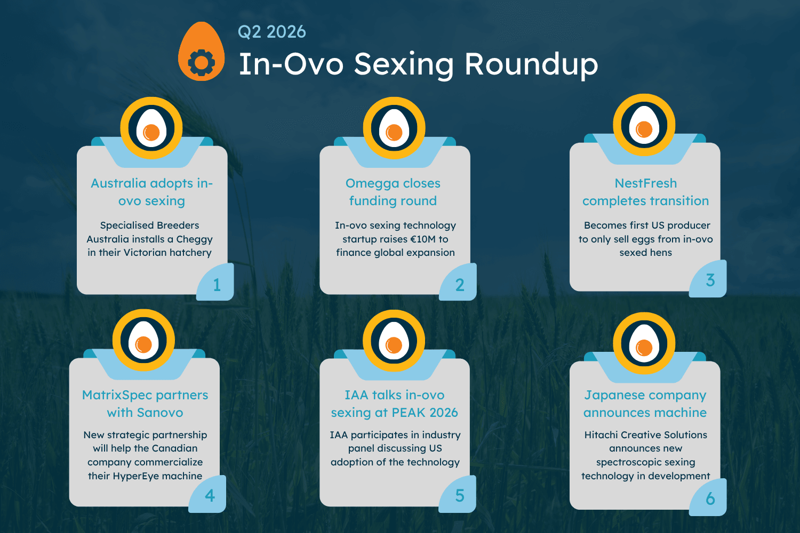
Welcome to Innovate Animal Ag's Q2 2026 in-ovo sexing roundup, where we dive into the latest news for the technology and what it means for consumers and producers.
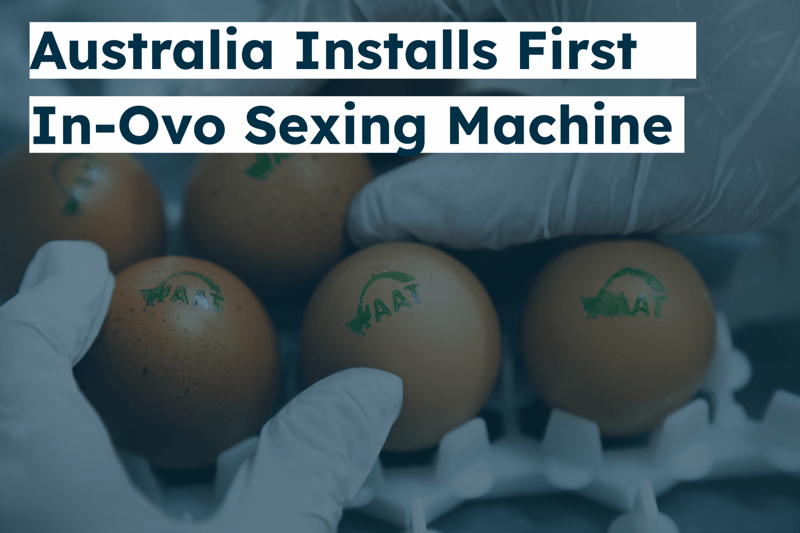
Australia’s largest hatchery announced the adoption of the first in-ovo sexing machine in the Asia-Pacific region.
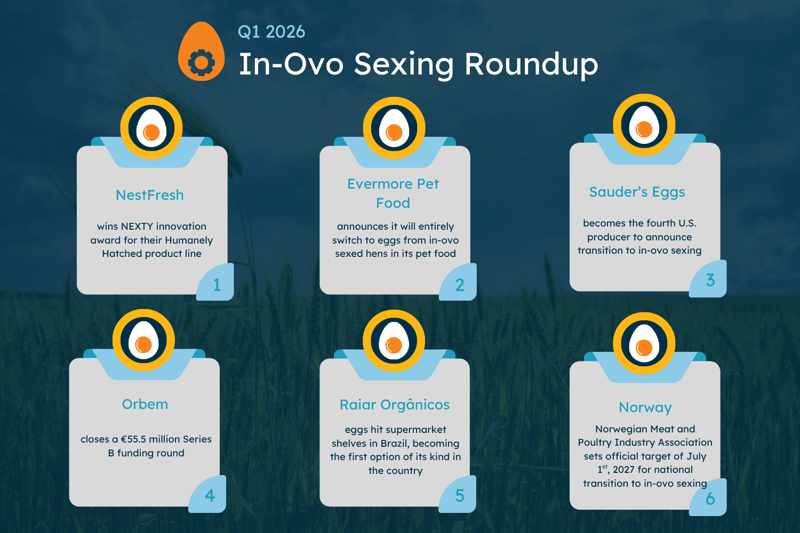
Welcome to Innovate Animal Ag's Q1 2026 in-ovo sexing roundup, where we dive into the latest news for the technology and what it means for consumers and producers.
2025 was the year in-ovo sexing went global. In addition to steady expansion throughout Europe, the year demonstrated the technology’s viability across a variety of commercial markets, including the United States and Brazil. The technology was increasingly adopted by major egg producers and retailers, indicating mainstream recognition of in-ovo sexing as the future of egg production.
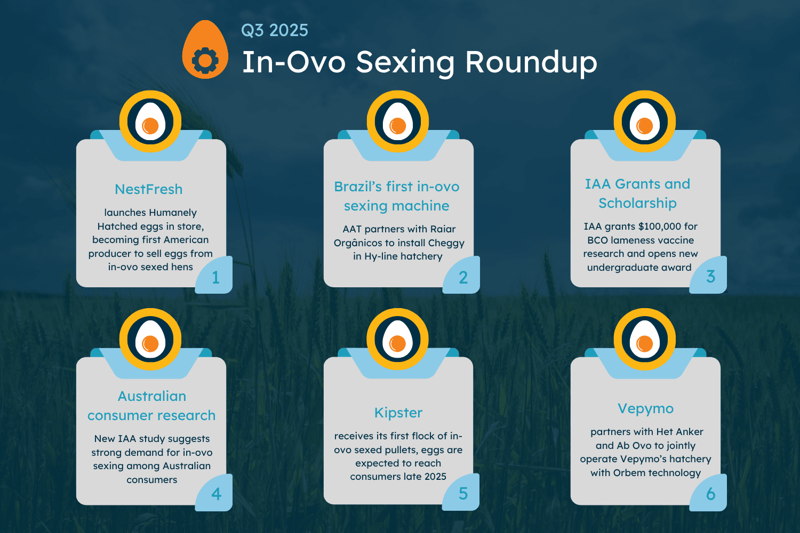
Welcome to Innovate Animal Ag's Q3 2025 in-ovo sexing roundup, where we dive into the latest news for the technology and what it means for consumers and producers. The third quarter of 2025 was an exciting period for in-ovo sexing, with several countries taking major steps in their adoption of the technology.

A recent consumer survey commissioned by Innovate Animal Ag reveals strong Australian market demand for eggs produced using in-ovo sexing technology. The results indicate that egg producers who adopt this technology will find a consumer base willing and eager to pay premium prices.
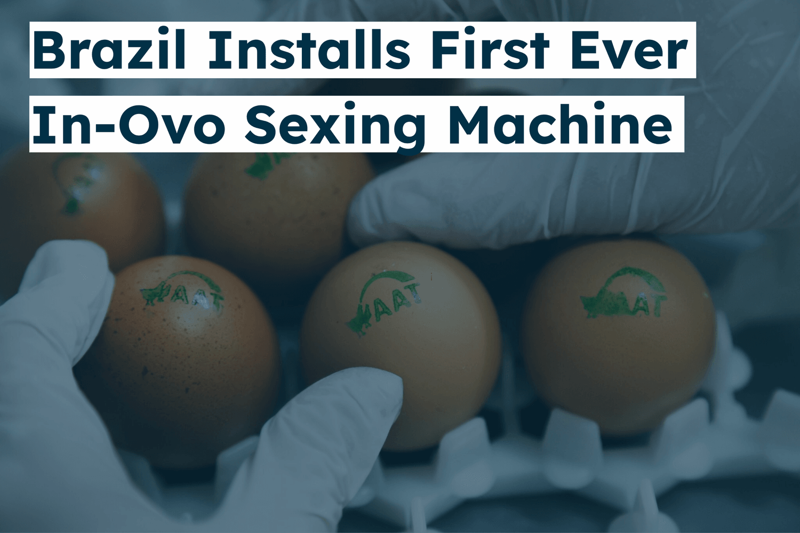
Agri Advanced Technologies (AAT) has partnered with Brazilian egg producer Raiar Orgânicos to implement the first ever in-ovo sexing machine in Latin America. AAT’s “Cheggy” in-ovo sexing system has been installed and is now operating successfully in a Hy-Line do Brasil hatchery.
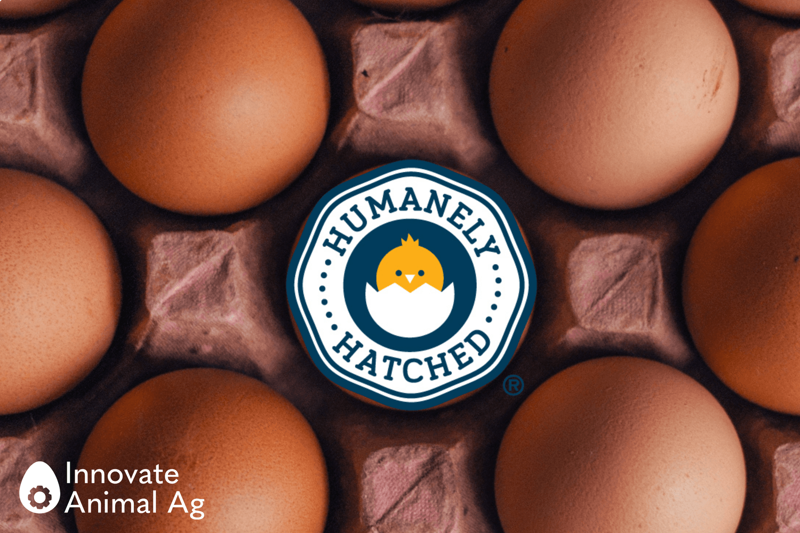
NestFresh, a pioneer in the US specialty egg market, has unveiled its carton packaging and marketing strategy for the nation's first commercially available in-ovo sexed eggs under the new branding Humanely Hatched™
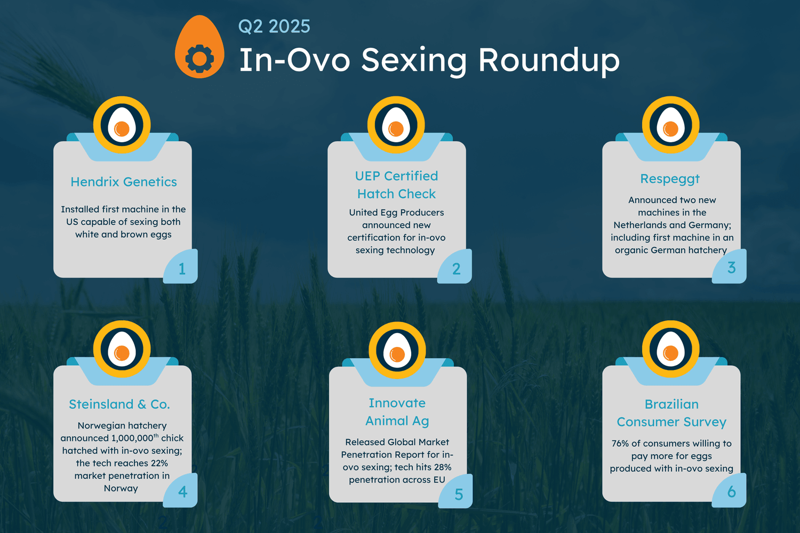
Welcome to Innovate Animal Ag’s in-ovo sexing quarterly roundup for Q2 2025, where we dive into the latest news for the technology, and what it means for consumers and producers across the globe.
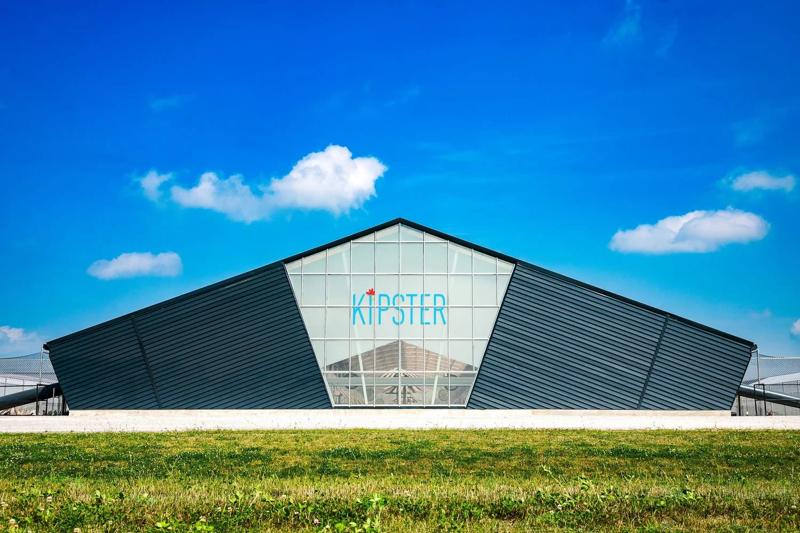
A new era for the US egg industry continues to hatch as Hendrix Genetics’ Nebraska facility processes its first flock of in-ovo sexed chicks using Respeggt’s groundbreaking technology. The flock is destined for Kipster, the second egg producer in the US to publicly utilize the technology.
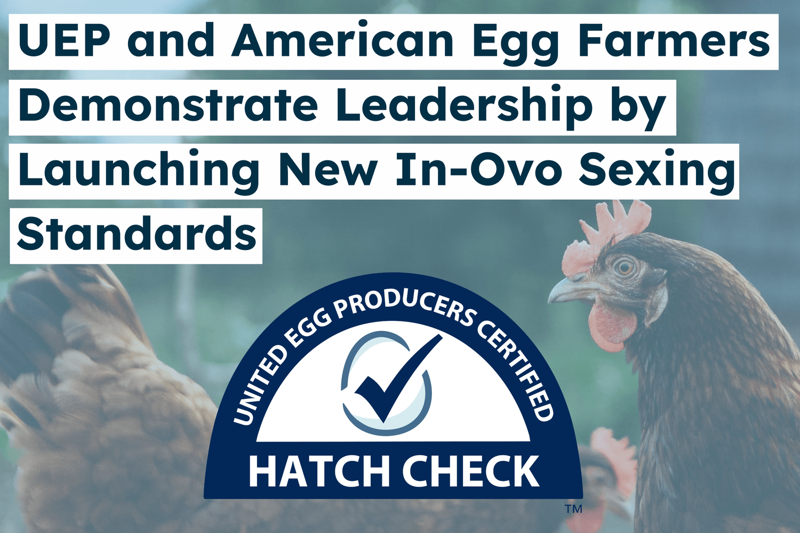
The United Egg Producers recently launched its in-ovo sexing certification standards, UEP Certified Hatch Check.

Steinsland & Co, Norway's largest hatchery, made history in 2023 by becoming the first in the world to implement in-ovo sexing technology without any regulatory mandate, a bold move that is proving successful as they are about to hatch their one millionth in-ovo sexed female chick.

The latest original research conducted by Innovate Animal Ag analyzes the market penetration of in-ovo sexing technology at the end of Q1 2025.
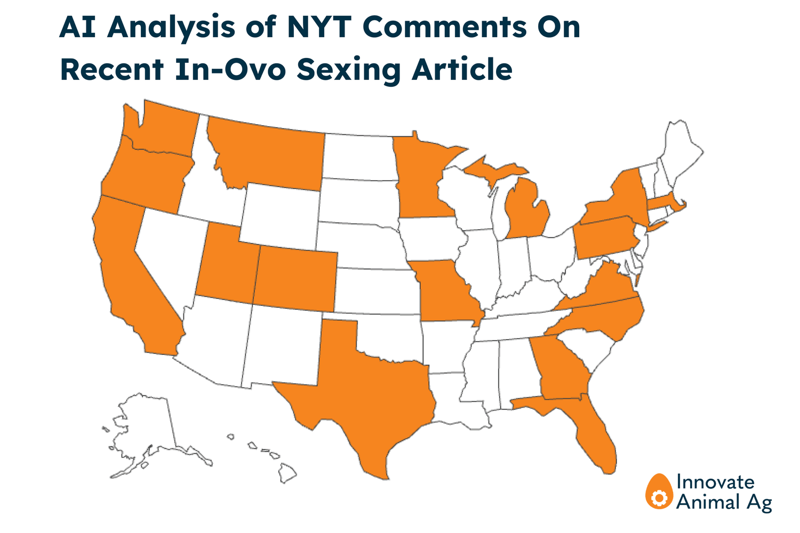
The New York Times recently published an opinion piece on in-ovo sexing which garnered comments from over 170 people. In-depth AI analysis of these comments painted a very optimistic and nuanced picture of how consumers will react to this technology, despite the sensationalized depiction of the topic of chick culling in the article.

We just launched our in-ovo sexing consumer survey for Brazil which reveals strong Brazilian market demand for eggs produced using in-ovo sexing technology.
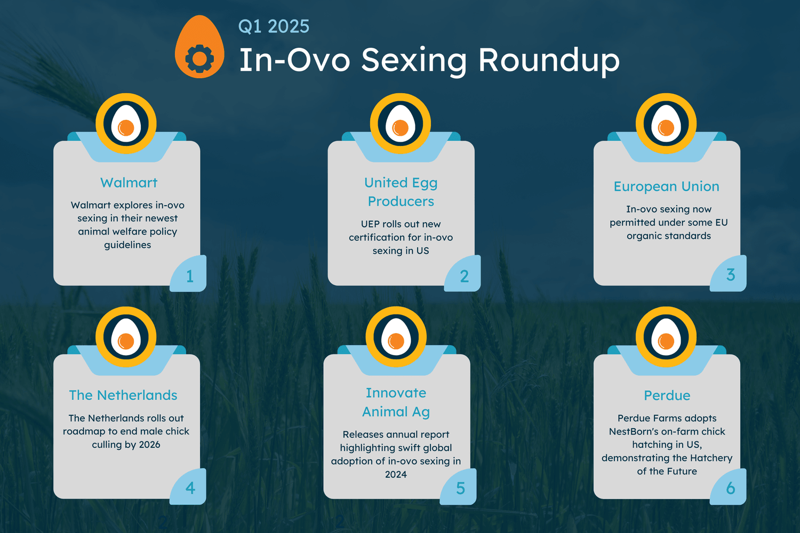
Welcome to Innovate Animal Ag’s in-ovo sexing quarterly roundup for Q1 2025, where we dive into the latest news for the technology, and what it means for consumers and producers across the globe.
On Tuesday, the Dutch Ministry of Agriculture, Fisheries, Food Security and Nature announced their ro admap to end male chick culling for table eggs sold in The Netherlands by 2026.
Walmart, the world’s largest retailer, known for its budget friendliness and accessible offerings, recently released new animal welfare policies and guidelines where the company made the innovative decision to include in-ovo sexing as a focus area for its US egg suppliers. This forward thinking announcement from Walmart comes just two short months after the very first hatch of in-ovo sexed chicks on US soil, and it sends a compelling message about the future prospects of in-ovo sexing’s rollout.
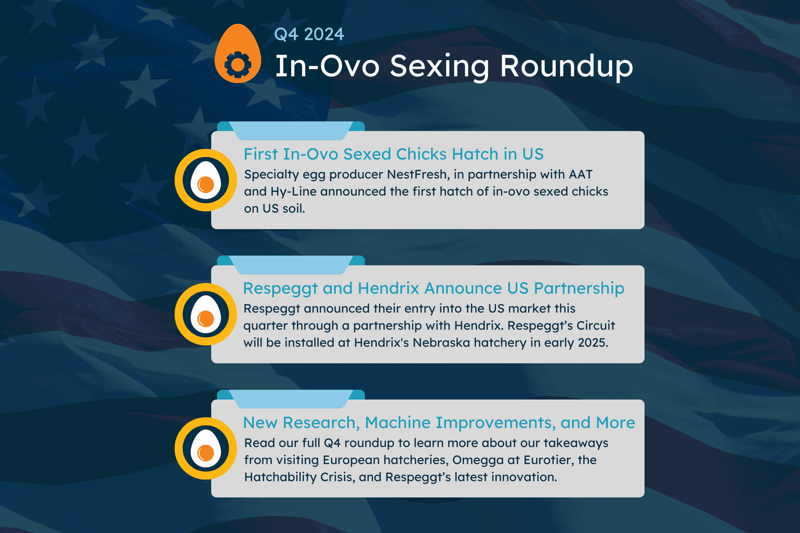
Welcome to Innovate Animal Ag’s in-ovo sexing quarterly roundup for Q4 2024, where we dive into the latest news for the technology, and what it means for consumers and producers across the globe.
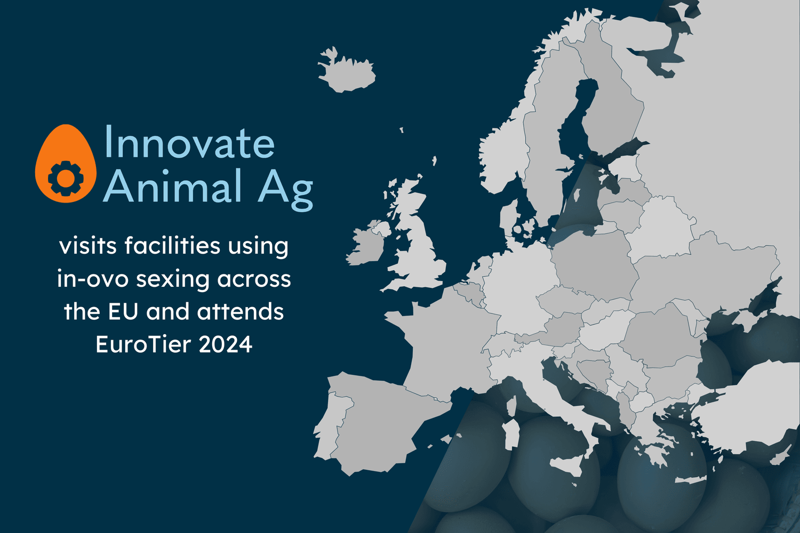
Last month, Innovate Animal Ag took a two-week trip to northern Europe to visit the birthplace of in-ovo sexing technology. We want to extend our gratitude to everyone we met that took time out of their busy schedules to help us gain a deeper understanding and appreciation of the amazing technological innovations coming out of northern Europe.
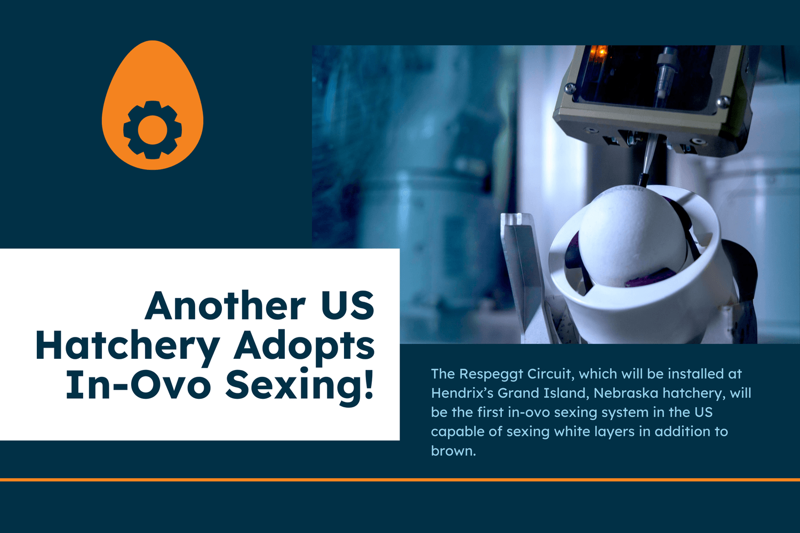
Respeggt, an in-ovo sexing technology supplier, and Hendrix ISA, a genetics company and hatchery operator, announced that a Respeggt Circuit will be delivered to the US in February 2025. The Circuit will be installed in Hendrix's Grand Island, Nebraska hatchery, which has the capacity to serve 10% of the US layer market.
Today, stakeholders and press gathered to celebrate the first hatch of in-ovo sexed chicks on U.S. soil with an event taking place at an Iowa hatchery. This occasion represents the advent of a new specialty category of eggs for American consumers.
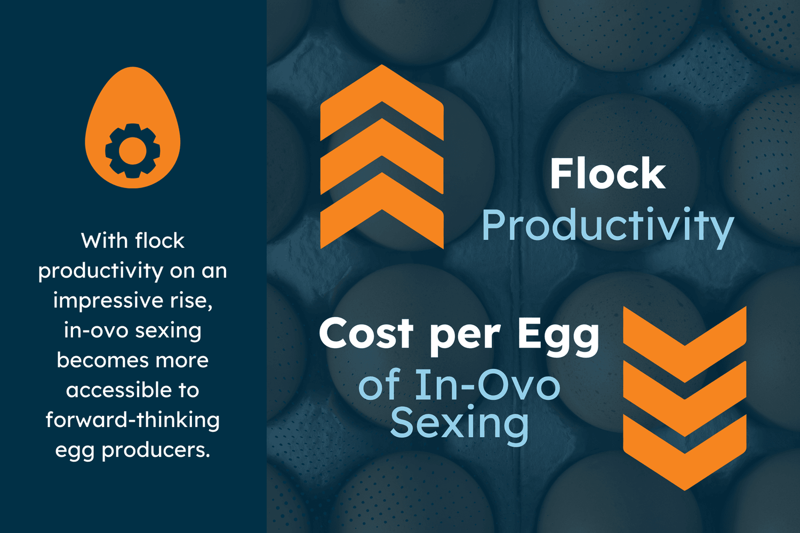
As genetic improvements in major layer breeds and scientific poultry management improve flock productivity, the cost per table egg of in-ovo sexing decreases, making the technology more accessible to interested egg producers.
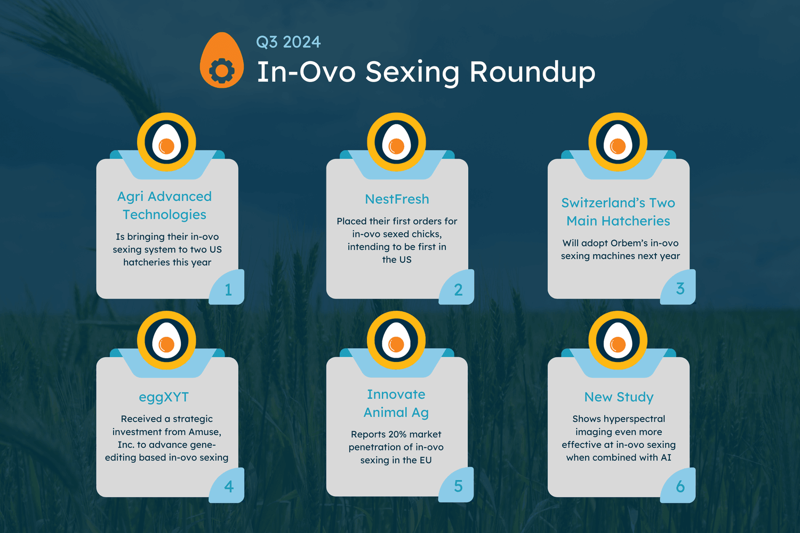
Welcome to Innovate Animal Ag’s in-ovo sexing quarterly roundup for Q3 2024, where we dive into the latest news for the technology, and what it means for consumers and producers across the globe.
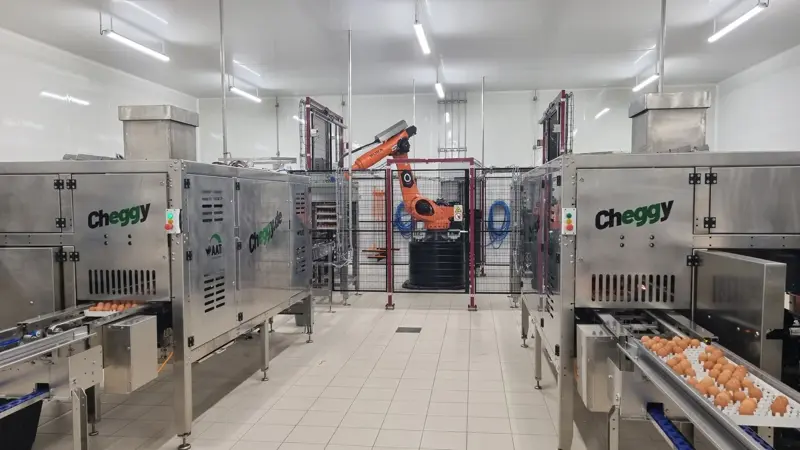
AAT announced that they are bringing their in-ovo sexing system to two US hatcheries in the fall of 2024. This comes on the back of three US egg companies in the last six months announcing intentions to sell eggs from in-ovo sexed hens, suggesting that AAT’s machine will supply these companies with in-ovo sexed hens.
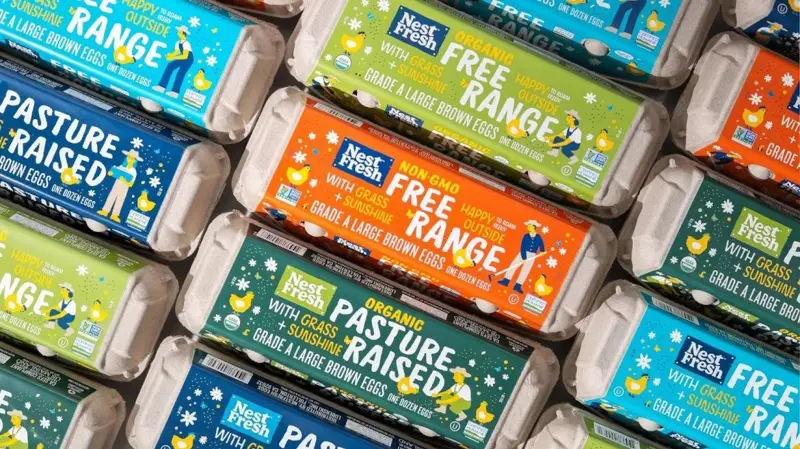
NestFresh, a leader in the US speciality egg sector, announced that they will be using in-ovo sexing for their entire egg line starting later this year.
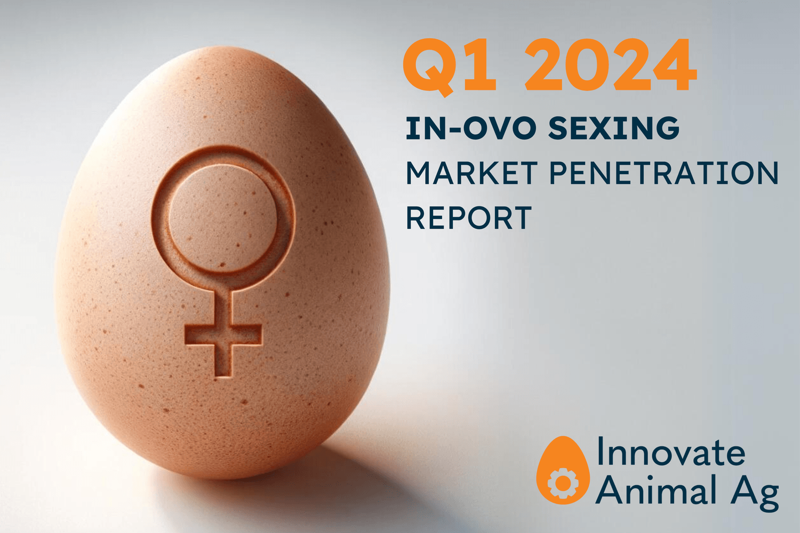
We recently released our updated EU Market Penetration Report which shows that 20% of the EU hen flock has now been sexed using in-ovo sexing technology.
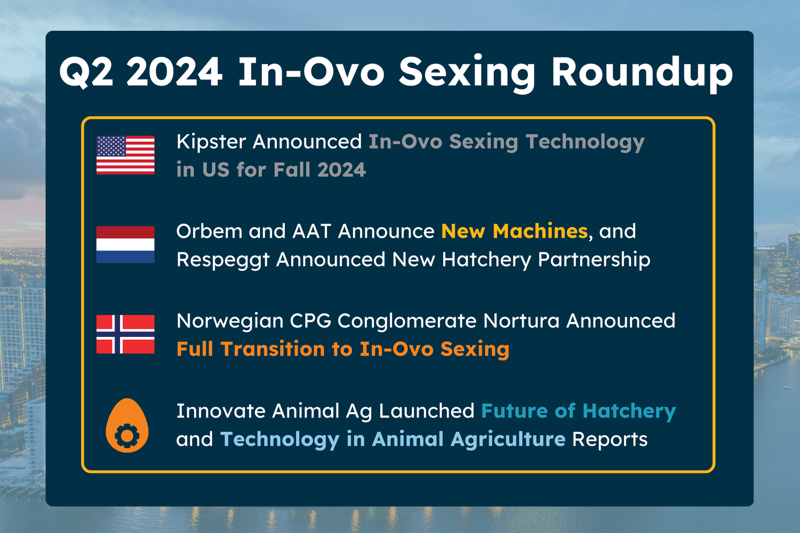
Welcome to Innovate Animal Ag’s in-ovo sexing quarterly roundup for Q2 2024, where we dive into the latest news for the technology, and what it means for consumers and producers across the globe.

With two US egg producers announcing the use of in-ovo sexing within such a short time, it’s likely that we’re seeing the beginnings of a new trend in American egg production.

Cutting edge technologies like on-farm hatching, in-ovo sexing, and in-ovo vaccination are transforming the interface between the hatchery and the farm. By moving all post-hatch handling steps pre-hatch, these technologies can eliminate live animal handling at the hatchery all together, resulting in a supply chain that’s both more efficient and humane.
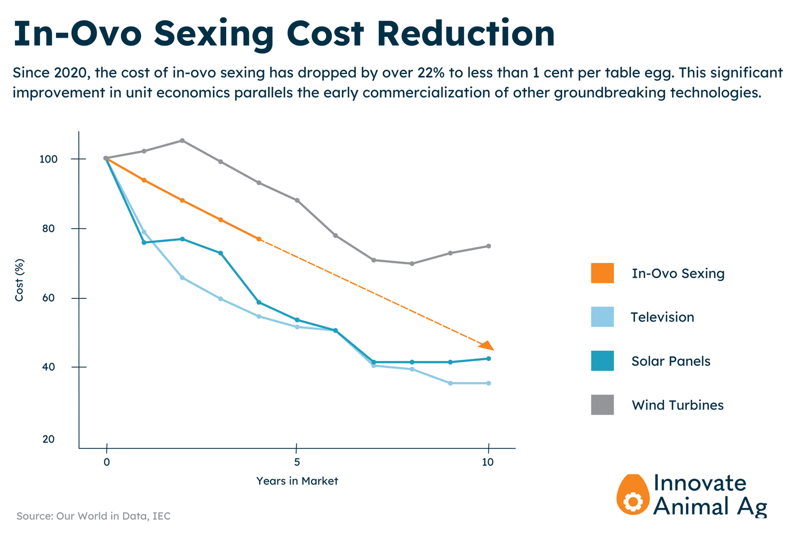
In a recent interview with Global Ag Media, economist Peter van Horne described some of the critical recent developments in the growing international discussion of in-ovo sexing. Most notably, after considerable improvement over the last few years, the price of in-ovo sexing technology is now less than 1 cent per table egg.
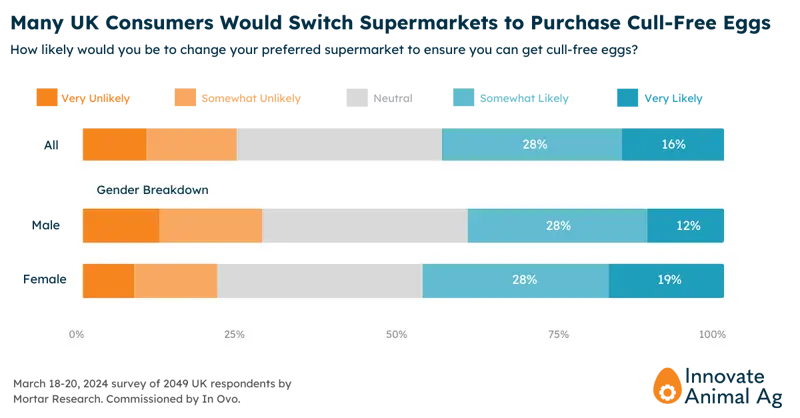
In-ovo sexing technology company In Ovo recently commissioned a survey of UK citizens to learn more about how consumers across the British Isles feel about the challenge of chick culling.
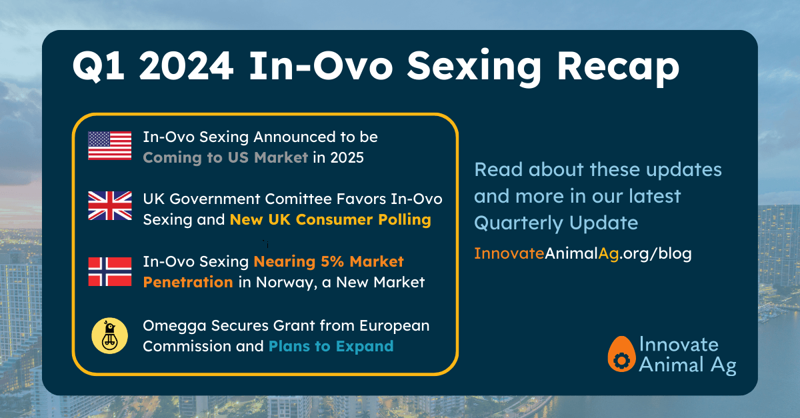
Welcome to Innovate Animal Ag’s in-ovo sexing quarterly roundup for Q1 2024, where we dive into the latest news for the technology, and what it means for consumers and producers across the globe.
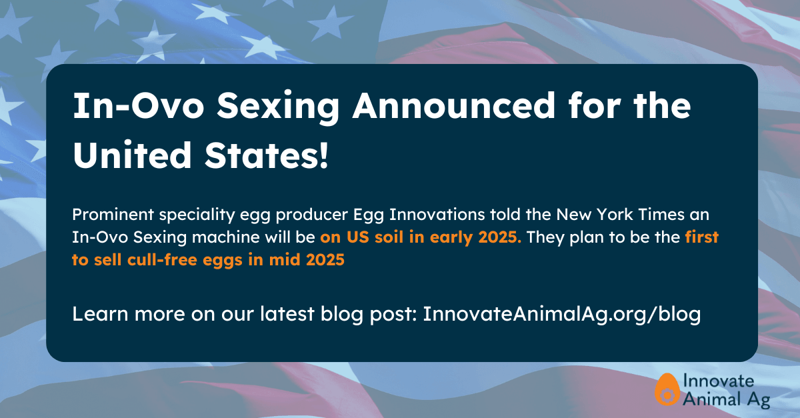
The moment is finally here: in-ovo sexing has been announced for the US market!
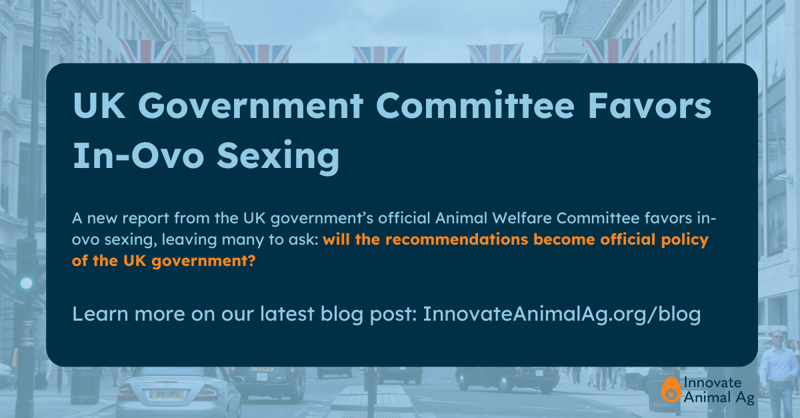
A new report from the UK government’s official Animal Welfare Committee favors in-ovo sexing, leaving many to ask: will the recommendations become official policy of the UK government?

In two short years, in-ovo sexing has grown from having a small impact in the German market to being the main method of complying with the German ban on chick culling for KAT certified eggs.

Last week, Innovate Animal Ag exhibited at the 2024 International Production & Processing Expo in Atlanta, Georgia. One of the most surprising parts of the event was the amount of discussion of in-ovo sexing.
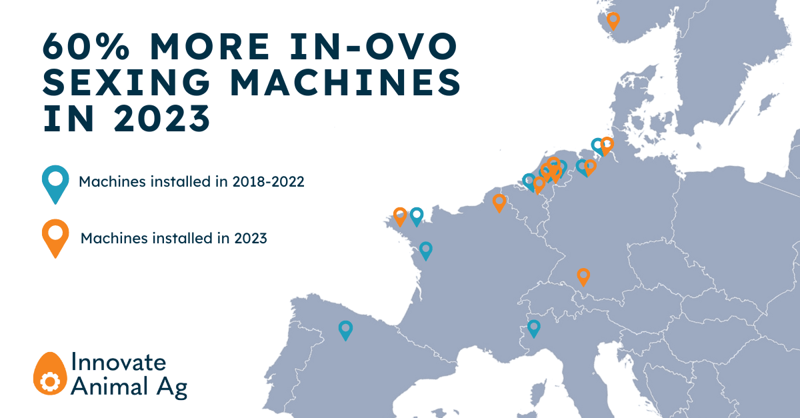
2023 saw a massive acceleration in the rollout of in-ovo sexing technology. During 2023, 10 additional machines were installed in five different countries, marking a nearly 60% increase in total machines installed globally in a single year.
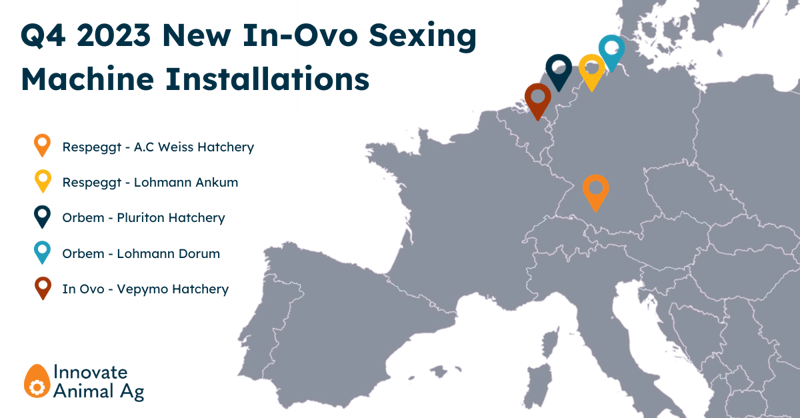
Q4 was an important quarter for in-ovo sexing, including significant capital infusions into the industry, a 23% increase in global capacity, and the release of multiple new pieces of research.
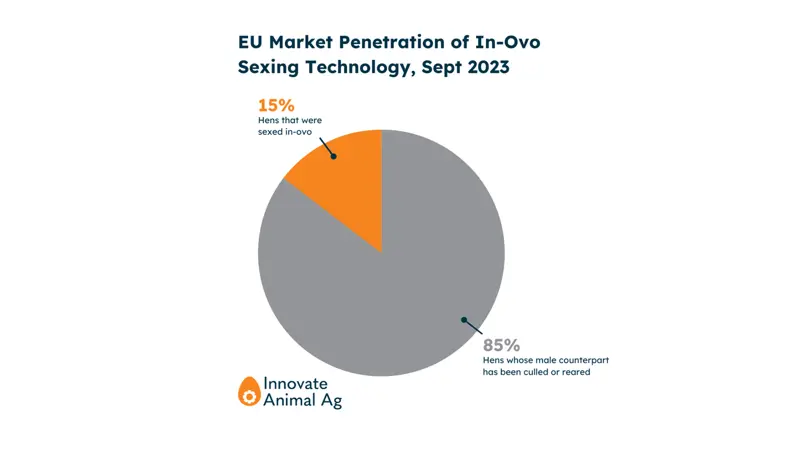
Original research by Innovate Animal Ag indicates that at least 56.4 million of the current layer population of 389 million hens in the European Union were sexed in-ovo as of September 2023, indicating a 15% market penetration after only 5 years.
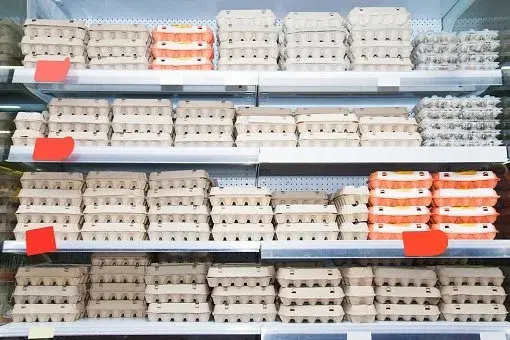
The Foundation for Food and Agriculture (FFAR) announced three finalists for the Egg-Tech Prize, a research competition to develop in-ovo sexing technology suitable for the mass market.
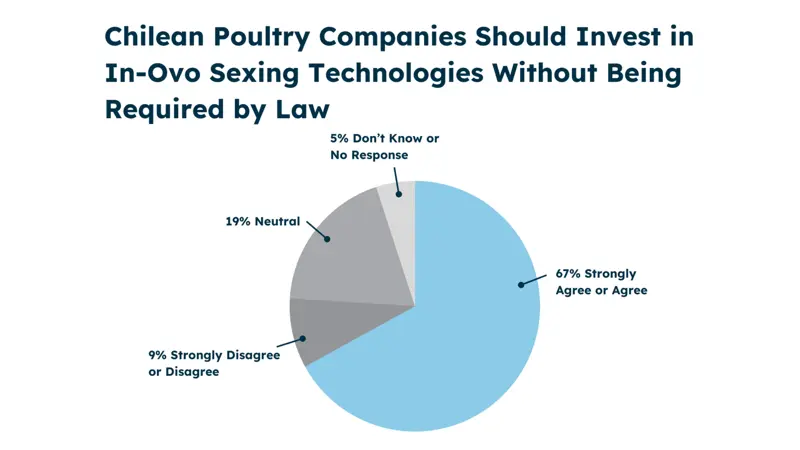
Consumer surveys from the EU, UK, and Chile point to a growing international consensus on the challenges of male chick culling.
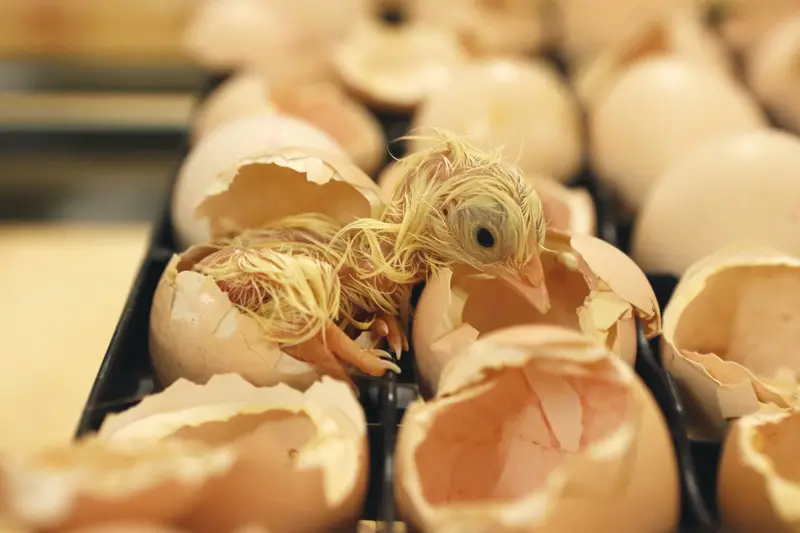
On-farm hatching is gaining popularity for broilers in Europe, but isn’t typically possible for layers due to the necessity of sorting out the females they hatch. However, as in-ovo sexing becomes more widely available, this situation will change. Once only females hatch, egg producers will too be able to enjoy the benefits of on-farm hatching.
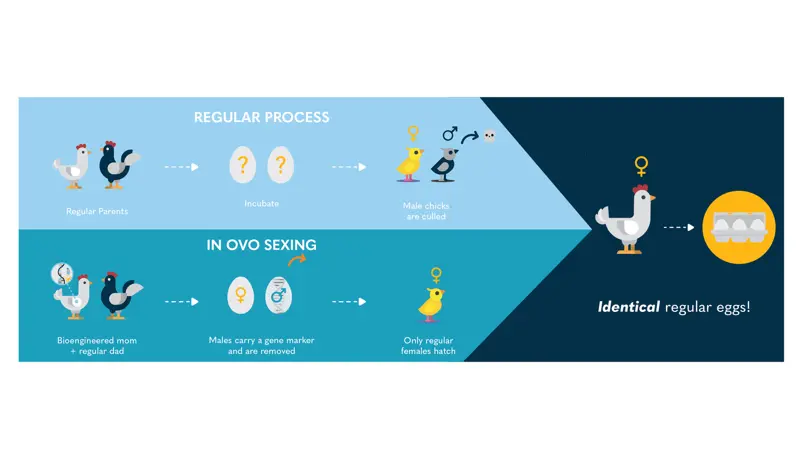
There were a number of important developments for in-ovo sexing technology in the third quarter of 2023, including commercialization milestones, the first survey of US consumer attitudes towards male chick culling, and international policy updates for technologies supported by gene-editing.
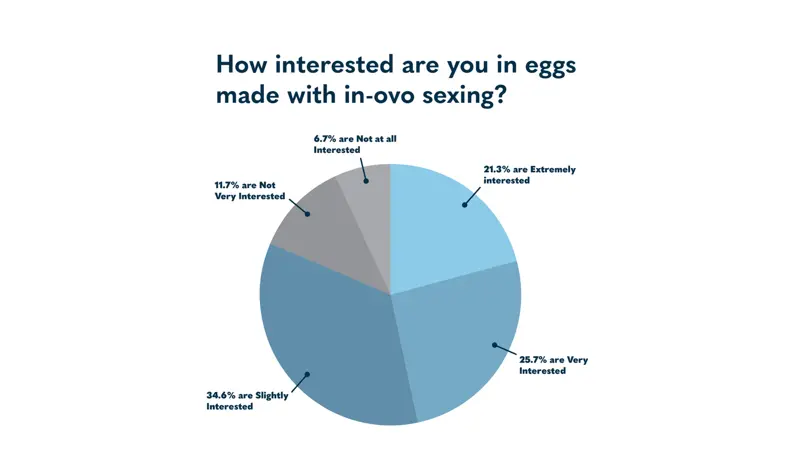
In-ovo sexing is now widely available in Europe, but not yet in the US. In this original survey commissioned by Innovate Animal Ag, American egg buyers express substantial interest and willingness to pay for eggs made with in-ovo sexing. For, egg producers at the high end of the market (e.g. pasture-raised, organic), there is a clear business case for in-ovo sexing, using technology that currently exists.
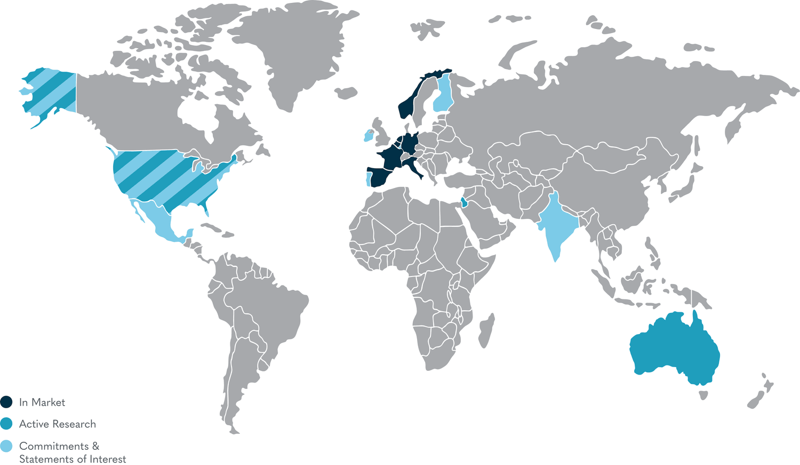
Each quarter, Innovate Animal Ag will dive into the biggest developments for in-ovo sexing, and what they mean for consumers and producers across the globe.
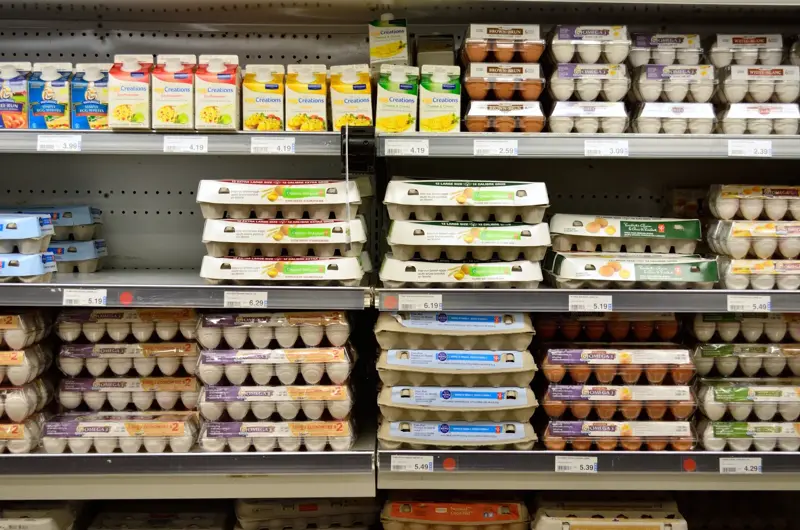
Technological improvements are still needed before in-ovo sexing is adopted industry-wide, but the path to commercialization need not wait for the technology to be perfected. As with many novel technologies, in-ovo egg sexing will most likely start at the high end of the market, and then come down market over time as costs fall.
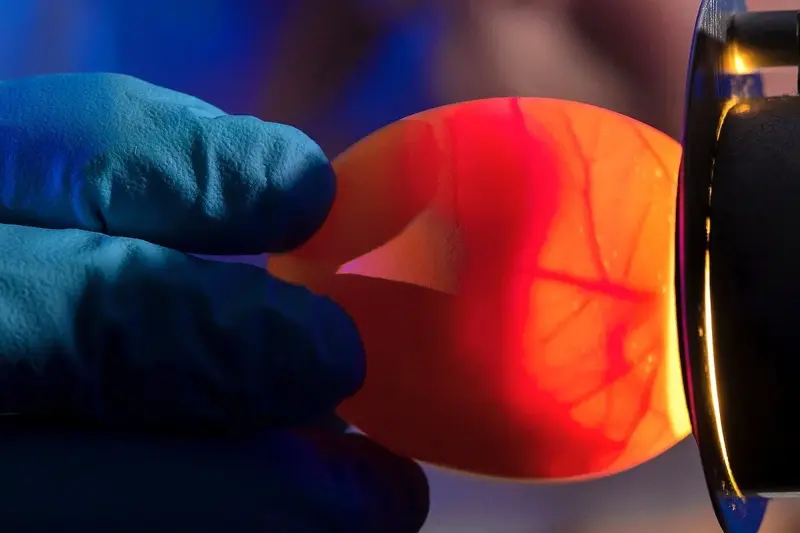
A study by the German government found that a chicken embryo begins to feel pain at day 13 of incubation.
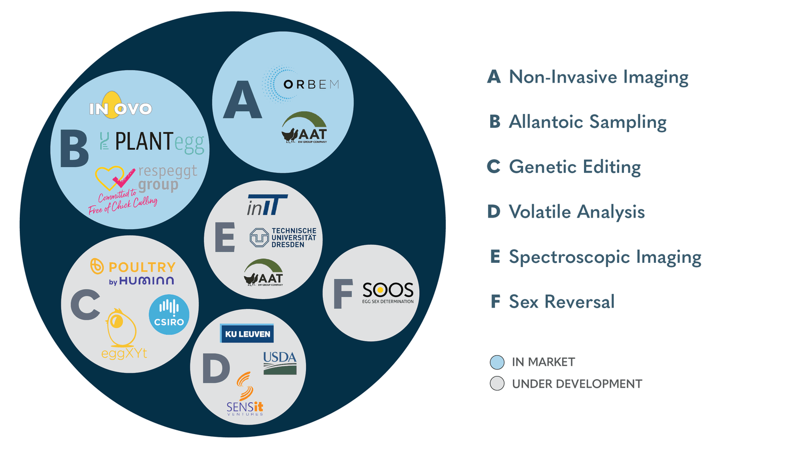
In-ovo egg sexing technology has made impressive progressive over the last few years. In this post, we give a snapshot of the market as of Q1 2023.