
Immunocastration
Immunocastration is standard practice across major pork-producing markets, eliminating boar taint and increasing profitability. However it is seldom used in the United States, leaving margins, export competitiveness, and sustainability gains on the table.
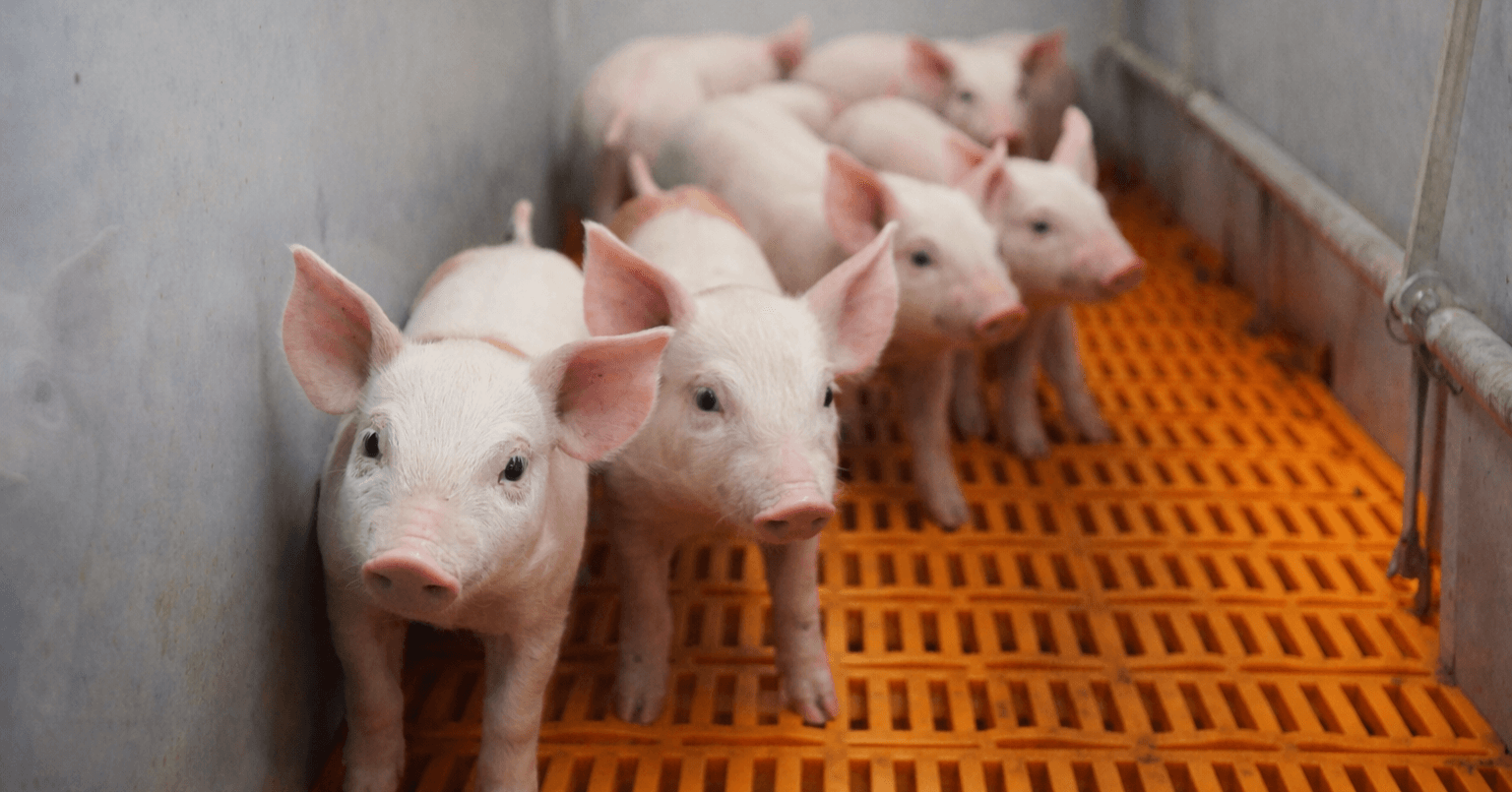
Boar taint is an unpleasant odor and flavor caused by androstenone and skatole, affecting 20-50% of intact male pigs at slaughter. About 75% of consumers perceive boar taint negatively, making it a real commercial risk for producers and packers. To avoid this, each year approximately 70 million male piglets are physically castrated in the United States, mostly without pain management. However, physical castration decreases pigs’ performance, leading to lower growth rates and feed efficiency.
Immunocastration is an alternative approach that has been commercially available for over a decade and is now a common practice in several major pork-producing countries, with 80%+ adoption in Brazil and more than a third of the market in Canada. For US producers, immunocastration represents an underutilized opportunity to improve margins significantly (up to $16/pig), animal welfare, sustainability, and export competitiveness.
What is Immunocastration?
Immunocastration is an active vaccination against gonadotropin-releasing hormone (GnRH). It stimulates an immune response to produce antibodies that inhibit GnRH, which reduces luteinizing hormone and follicle-stimulating hormone, lowering testosterone and androstenone production and preventing boar taint. Because intact males convert feed more efficiently and grow faster — driven by naturally higher testosterone — immunocastration captures these performance advantages through most of the production cycle, suppressing them only in the final weeks before slaughter.
The standard protocol involves two subcutaneous injections given at least 3-4 weeks apart, with the second dose administered 3-10 weeks before slaughter. After the second dose, behavior becomes similar to that of physically castrated pigs, and antibody responses develop within days. The vaccine effects are temporary, which means producers must adhere to the recommended dosing window to ensure taint control in the final product.
Immunocastration also has applications in female pigs (gilts). By suppressing estrus, it reduces fighting and mounting behaviors associated with the estrous cycle, allowing the deposition of higher-quality, more saturated fat, which is advantageous for products like bacon. Canada, for example, already immunocastrates gilts to produce bacon for Japan.
Several delivery methods for immunocastration are either commercially available or in development:
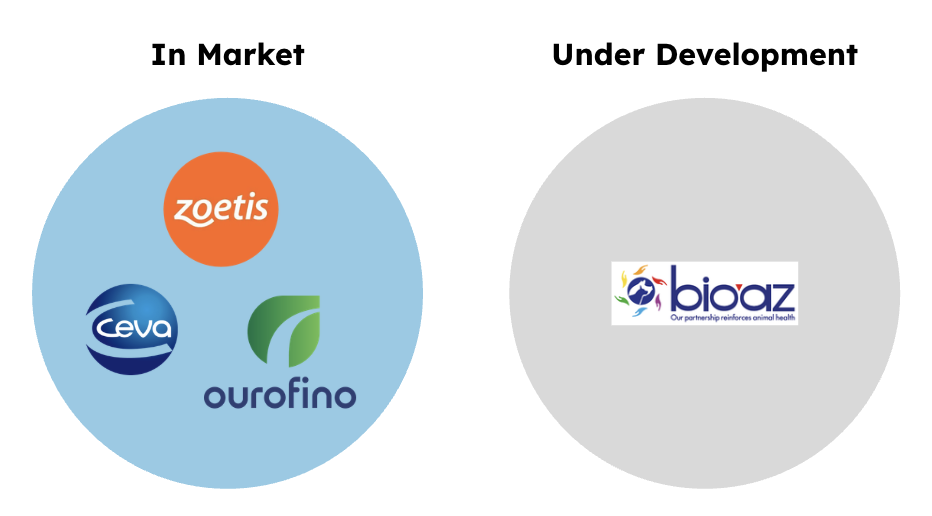
- Two-shot vaccine: Zoetis' Improvest (marketed as Vivax or Improvac in other countries) has been the dominant commercial product for decades, and competitors such as Ceva's Valora and Ourofino's LeanVac in Brazil have been entering the market more recently.
- One-shot immunotherapy: A product requiring only a single injection, with intramuscular application (reducing the risk of skin necrosis) is being developed by BioAZ. It is expected to be commercially available by the end of 2029.
- Sperm sexing and gene editing: These alternatives are being studied but are still far from commercial availability.
The Business Case
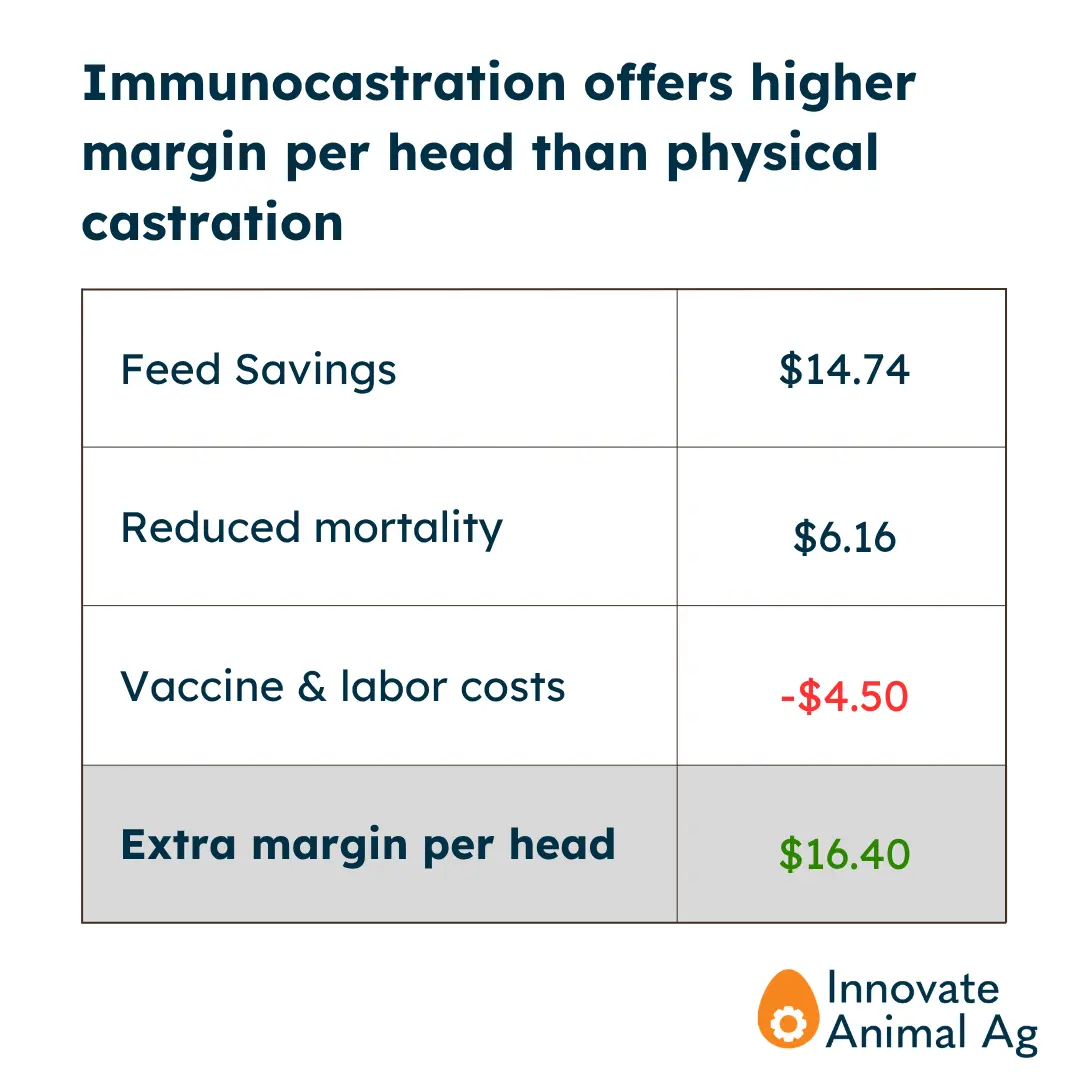
Based on published literature and field data, immunocastration increases profitability per pig by roughly $16 for a typical producer, with a broader range depending on the degree of vertical integration and local conditions. This includes substantial improvements in feed conversion rates (studies show an improvement of 15-25% compared to physically castrated pigs), as well as mortality (at least -2 percentage points in mortality from wean to finish). The $16 figure also doesn't account for additional upside from heavier finisher carcasses, lower antibiotic use, and carbon emissions reductions from improved feed efficiency.
For packers, beyond taint management, studies show that immunocastrated males deliver up to a 2.5% increase in cutout yield, directly boosting packer revenue per carcass. Objective meat quality parameters like color, marbling, pH, drip loss, shear force, and intramuscular fat remain consistent with conventionally castrated pigs.
Immunocastration vaccines operate under USDA-certified verification protocols, including technician training and full-inspection auditing systems, providing end-to-end traceability and quality assurance. No withdrawal periods are required before slaughter. On gilts alone, immunocastration can add up to 7 lbs of hot carcass weight, translating to approximately $4.65 per head in added plant value. Additional gains come from fabrication yield improvements and heavier, higher-value bellies.
Beyond economics, immunocastration offers other significant advantages:
- Export competitiveness: Brazil, with 80%+ of its pork production immunocastrated, has grown pork exports by 143% from 2015 to 2024, compared to 42% for the U.S. over the same period. Brazil is now making inroads into markets that have historically been U.S.-dominated, including Japan, Mexico, and Canada. Brazil's cost of production runs approximately 30% below the U.S., and immunocastration is an important driver of that efficiency gap. All of these importing markets accept immunocastrated pork without restriction.
- Sustainability: More efficient feed conversion means less feed consumed, less manure produced, and lower greenhouse gas emissions per pound of meat. Immunocastrated males have shown a higher mean average daily gain and a lower mean FCR compared to gilts and physically castrated males, resulting in 7.1% and 6.8% lower carbon footprints, respectively.
- Animal welfare: Physical castration in the U.S. is performed almost entirely without pain management and involves a recovery period of up to seven days. No anesthesia or analgesia is currently FDA-approved for commercial use during piglet castration. Beyond eliminating the procedure itself, immunocastrated pigs show better health outcomes: Brazilian producers report up to 30% lower antibiotic use at the nursery stage, correlating with 26% lower mortality.
- Meat quality and taint control: Consumer taste panels involving sensitive consumers confirmed that pork from immunocastrated pigs is indistinguishable from pork from physically castrated animals in both aroma and flavor. Immunocastration substantially reduces androstenone and skatole, lowering boar taint risk to below 1% in properly administered programs, matching the rate of physical castration. Immunocastrated gilts have more intramuscular fat, firmer bellies, lower iodine values (better fat quality), and heavier carcasses.
- Labor and workforce retention: As the agricultural labor market tightens, attracting and retaining skilled farm workers has become an increasing operational challenge. Transitioning to immunocastration streamlines farm workflows, elevates the quality of daily work for animal care staff, and contributes to a more positive workplace culture. Workers report higher job satisfaction when their roles focus on animal observation, health monitoring, and husbandry rather than invasive procedures, and producers find that these types of transitions improve their ability to recruit and retain the talent needed to run efficient, high-performing operations.
Get Involved
Immunocastration is a proven technology with a strong economic case and meaningful welfare and environmental benefits. It has been successfully scaled across hundreds of millions of pigs in Brazil, Canada, Australia, Colombia, and other markets for many years. The fact that it remains below 5% adoption in the U.S., despite being FDA-approved since 2011, represents a big opportunity untapped by the U.S. pork sector.
From an export perspective, the competitive dynamics are clear. Brazil's rapid export growth into U.S.-dominated markets is fueled in part by the production efficiencies that immunocastration enables. As global buyers increasingly prioritize cost, consistency, and sustainability credentials, U.S. producers who continue relying exclusively on physical castration may find themselves at a growing disadvantage.
Innovate Animal Ag is actively exploring ways to make immunocastration adoption easier for the North American market and is in conversation with producers, packers, and technology developers. If you are involved in pork production or processing and would like to discuss this technology, we welcome the conversation.
Frequently Asked Questions
Is immunocastrated pork safe and indistinguishable from conventionally castrated pork?
Yes. Consumer taste panels involving sensitive consumers confirmed that pork from immunocastrated pigs is indistinguishable from pork from physically castrated animals in both aroma and flavor. Immunocastration substantially reduces androstenone and skatole, the primary compounds responsible for boar taint, matching the rate of physical castration. No withdrawal period is required, and the vaccine leaves no residues in the meat. As noted above, the product contains no hormones and does not alter the animal's genetics; it works entirely through a temporary immune response.
How can packers be sure that pigs arriving at the plant were properly immunocastrated?
This is directly addressed by the certified verification program that comes with the product. For Zoetis’ Improvest, the only option currently available in the U.S., the program includes trained and certified vaccination technicians, a proprietary tracking system covering prescriptions, two-dose timing, and in-barn quality assurance inspections, and a full audit conducted two weeks after the second dose to verify compliance. A quality assurance certificate is delivered with the animals at market.
Will consumers or retail buyers push back on immunocastration?
Consumer awareness of castration practices in pork production is very low: a survey Innovate Animal Ag conducted in December 2025 found that 83% of U.S. respondents were unaware that male pigs are castrated at all. When informed, consumers rated immunocastration as the most humane option available. Major export markets including Japan, Mexico, South Korea, and Canada, where U.S. producers compete directly with Brazil, already accept immunocastrated pork without restriction. For retailers with sustainability commitments, immunocastration also offers a measurable reduction in Scope 3 emissions tied to feed efficiency gains. Importantly, because the product is a vaccine with no hormones, growth promotants, or genetic modifications involved, it avoids many common consumer concerns.
Are there safety risks for farm workers administering the vaccine?
Accidental self-injection is a known risk that requires proper handling protocols. Because the vaccine acts across mammals, two doses could temporarily suppress testicular function in a person. This risk is real but manageable: only trained and certified technicians administer the product, and the program includes specific safety training on injection technique and handling procedures. The expected immunological response from an accidental single injection reverses within weeks, and documented incidents have been rare. Proper needle guards, handling protocols, and operator training are standard components of any certified immunocastration program. Other technologies under development such as feed-based administration could completely solve this problem.
Does immunocastration make sense for gilts, not just male pigs?
Yes. By suppressing estrus, immunocastration improves daily weight gain and uniformity, adding up to 7 lbs of hot carcass weight per gilt. It also promotes the deposition of firmer, more saturated fat — an advantage for products like bacon. Because immunocastrated gilts are visually indistinguishable from untreated gilts after slaughter, the technology can be introduced without changes to how carcasses are processed or labeled, making it a lower-friction entry point for packers and producers exploring the technology for the first time.
For more on our work, visit innovateanimalag.org. To reach Gabriela Menin directly, email gabriela@innovateanimalag.org.